The week’s horrors so far…

A midweek flurry of Mainlandizing rectification crap starts with the – surely unprecedented – sighting of an RTHK news puff-piece. Appropriately, it is about Greater Bay Area Opportunities!!! for young people, quoting eager participants at a jobs fair proclaiming that they won’t ever ever talk politics with colleagues over the border. By ‘news’, we mean ‘positive energy’. And a tragic absence of the subliminal snark for which RTHK English online has rightly (and quietly) been renowned. Patriotism will henceforth creep through the system, like cobra venom that gradually paralyzes you from the toe up.

The government steps up its campaign against medical professionals who do not echo the official Sinovac-is-wonderful-BioNTech-is-bleah line. Officials have barred a clinic from the vaccine distribution network for comparing the Chinese jab (accurately/unfavourably) with the nasty foreign one. My doctor did the same, but the CCP’s local newspapers didn’t find out about it and accuse her of ‘smearing’ the glorious motherland’s wondrous vaccine. In this case, Ta Kung Pao got wind of it – so the government must act.

Like when a Mainland state publisher offers the whole 48-volume My First Little Good Little Patriot’s Nationalist Book – and education officials rush to grovel in gratitude and shove it down schools’ throats.

But this need for highly visible blind obedience apparently doesn’t apply to housing policy. Well-connected Mainland figures have hinted loudly that Beijing plans to fix ‘deep-rooted’ problems once it has installed all-patriot quasi-elected bodies in Hong Kong. (There is even scintillating talk of expropriating tycoons’ unused land hoards.) And wide-eyed, innocent Chief Secretary Matthew Cheung confirmed to the FT that Beijing had issued instructions to tackle housing.

The government leaps in to say, in effect, that Matthew never said that, and the FT or whoever were just imagining it.

This is probably because – let’s face it – it does sound rather as if Hong Kong no longer has its own administration, doesn’t it? (Like when Matthew gave the tragic impression we no longer have a proper police force.) And the Chief Executive has no choice but to rebut that suggestion, simply in order to convince herself in her own mind that she is still in charge.

It might also be because the whole concept of delivering affordable housing is so monstrous and alien to our top officials that total denial of the idea is the only way to keep their synapses from seizing up.


Posted in Blog | 4 Comments

Does Sinovac make a chill pill?

After a slightly slow weekend, the Mainlandized Rectified Patriotic Blob stirs into action again.

Eight of the HK12 are transferred back from Shenzhen to Hong Kong under circumstances that attract criticism from lawyers. 

Beijing’s officials will want to make examples of them. This might mean telling the Justice Dept prosecutors to lay maximum charges and demand maximum penalties. But it could mean offering a few of them some leniency if they make appropriate confessions and recantations. Mainland authorities must have been leaning on them during their seven or so months in detention up there, and it would be a good opportunity to introduce some new CCP-style approaches to justice in Hong Kong, and to send a message of ‘positive energy’ to other young people.

Carrie Lam’s CCP-worshipping over Sinovac leads her to rail against medical experts as if she knows far more about vaccines and related matters than they do. This is a repeat of her outburst last week, when she accused unnamed parties of ‘smearing’ Sinovac and trying to undermine public confidence in vaccinations. 

Maybe she is taking her frustrations out on others because she can’t face the reality that she herself has destroyed public trust in the government’s dedication to the people’s health by pushing Sinovac when it seems clear BioNTech is a superior product. (Leaving aside the other ways the government has shredded its own credibility over its handling of the pandemic, or the ways she has disillusioned and alienated citizens generally with her overt loyalty to Beijing rather than to their city.) She perceives Beijing as watching her carefully, while uppity medical professionals make her – and the Motherland’s glorious and generously supplied vaccine – look bad. Equals temper tantrum.

Posted in Blog | 9 Comments

Not many major horrors this weekend…

Maybe even dictatorships need a rest occasionally. Some fresh and wholesome links…

Quartz on the SCMP’s likely course if/when/as it passes from Jack Ma to a more dependable CCP-supporting owner. Given the context of the overall rectification of Hong Kong, it is inevitable that the pro-Beijing slant of much of the op-eds, editorials and commentary will creep into the news reporting. The question is how subtle it will be: will the new owners aim to please the CCP by producing laughable propaganda (a la China Daily HK), or will they do a more skilful job of trying to convince readers of the rightness and credibility of the PRC’s official line?  

The real media question is how the CCP will dispose of Apple Daily. While Beijing plots its vengeance, Kevin Carrico writes on declining academic freedom in Hong Kong…

Is it ok to discuss Hong Kong independence if you are not openly advocating this idea? Can we discuss Taiwan’s history and current reality without having to pretend that China’s claims make sense? Can we discuss human rights in Hong Kong and current sanctions against officials without overstepping the bounds of regime security? 

Probably paywalled, but the Economist has a good report on Beijing’s demolition and redevelopment of Hong Kong, including comments from your friendly think-tanker Tian Feilong… 

As for the hundreds of thousands who joined the protest movement, Mr Tian trusts that education reforms will produce a new generation of youngsters who understand China and love it. He has blunter advice for those too old for school and stubbornly wedded to liberal values. “I think they will experience a painful psychological transition, in other words, they will have to re-educate themselves.”

Such CCP charm was also in display at the recent Sino-US strategic dialogue summit. A not-bad analysis in The Atlantic of the event in Alaska… 

The meeting would have been a failure if it had resulted in general declarations to cooperate while minimizing competition, a common U.S. strategy when China’s intentions were not as clear.

If the Biden administration’s people have a less misty-eyed view of China than they might have once, Foreign Policy reminds of us of one big reason (of several): a damning indictment of Beijing’s cover-up of Covid-19.

Like the SCMP, Chinese youth are also coming to terms with life after Jack Ma and Alibaba. What will the kids get into after online fetishized debt-creating consumerism? Something wholesome like sex, drugs and rock n roll? Nope.

And some pictures after being put through a particularly horrifying app. Which one will be hardest to unsee?

(The answer to Friday’s quiz – the country with the second-highest percentage of 100-year olds – as Google-users quickly determined, is Uruguay. Is that because: a) most under-50s have emigrated or otherwise vanished; b) it was the first country to legalize marijuana; or c) there’s something in the water?  

Posted in Blog | 6 Comments

Some nearly-end-of-week links…

An HKFP op-ed writer deregisters as a voter. Not sure this makes sense. The more right-thinking people there are on the electoral rolls, the smaller the percentage turnout of registered voters will be when they boycott an election. A turnout below 30% would be a major embarrassment to the government. Register but don’t vote.

We’ve discussed it knowingly for a year, now find out what it is: everything (it’s big) you wanted to know about herd immunity, by HKU’s Prof Ben Cowling.

Jerome Cohen comments on the inconsistent results of the HK47’s bail applications, and how the NatSec Law is ‘expansive and hopelessly vague’. HKFP on the weird reporting restrictions. Reuters on the Yellow online store catering to the needs of political prisoners.

Transit Jam on the sustainability of FoodPanda-type deliveries in Hong Kong, including tales of delinquents ordering tiny items from stores just a short walk away. Obviously, getting meals delivered (unless you’re aged and infirm) is slovenliness beyond even that of the wretches who buy microwavable ready-cooked rice from Marks & Spencer. But Hong Kong supermarkets’ hyper-cramped interiors and long check-out lines don’t exactly make shopping in person a pleasant experience.

NPR asks where Covid-19 came from. Looks like wildlife farms – encouraged by the government – in southern China. By ‘wildlife’ we mean bizarre beasts you’re not supposed to domesticate.

How Beijing gets an easy ride when the US news media are owned by entertainment companies.

From The Initium, a huge collection of posters and Lennon Wall-related materials from 2019.

Probably busy tomorrow catching up on the Midsomer Murders Bot. But here’s a quick quiz… Japan has the highest percentage of people aged over 100 in the world. Hong Kong has the third-highest. Which country comes second?

Posted in Blog | 23 Comments

Rectifications du jour

Here’s an intriguing piece by journalist (and former guest of the Mainland’s NatSec apparatus) Ching Cheong on Beijing media and other documents dating from 2003 up to 2019, outlining plans for direct central control of Hong Kong. Among them is a policy of ‘retaining Hong Kong without undesirables’. Seems Xi’s current clampdown is not a new or original idea.

Which brings us to the latest rectifications… 

A pro-Beijing lawmaker (the only sort, these days) accuses the yet-to-be-opened M+ museum of infringing the NatSec Law, prompting Chief Executive Carrie Lam to declare that the government will be ‘on full alert’ and not allow arts to threaten national security. Yes, they’re coming for the paintings. (This might have been prompted by the museum’s pledge not to censor. Examples of images the valiant NatSec police might round up at dawn here, here, here and here.)

And CCP paper Ta Kung Pao does the same to the HK Arts Development Council. Only a matter of time before any cultural or creative group will have to pre-emptively declare its patriotism in order to use public funds or facilities. 

Meanwhile, the Dept of Justice suspends senior prosecutor and critic of police tactics William Wong. And a new oath-requirement will presumably be used to disqualify pan-dem district council members. Also, RTHK’s new boss aims to go full patriotic.

Anything I’ve missed?

Ah, of course – judges. Reuters reports on fears that patriotism tests for officials will apply to the judiciary.

And let’s not forget the internet. In Nikkei Asia, an expert on how Beijing is likely to take rectification online here…

Hong Kong’s internet has not developed with control in mind as China’s has. This difference will create technical challenges that make exporting the Great Firewall wholesale to Hong Kong exceedingly difficult for Beijing.

But … Beijing has no shortage of censorship and surveillance tools at its disposal and some may even be more effective in Hong Kong than in the mainland.

Far away, resistance is stirring. I’ve had the 2021 Hong Kong Charter open in a tab for several days, and the SCMP, no less, nudges me to take a proper look. It’s put together by Nathan Law and others and designed to serve as a rallying flag for ‘diasporic’ Hong Kong and to focus international advocacy efforts. The tone hints at a proto-government in exile, which you may find pretentious or inspiring – or (my preference) cool because it’s guaranteed to annoy all the right people. The SCMP, in a more-than-averagely gutless editorial, advises its readers not to go near it. So here you are.

Posted in Blog | 18 Comments

Tip: write ‘Comirnaty’ on the back of your hand

Online amateur experts debate the relative merits of Moderna, AstraZeneca, J&J, etc as if they’re discussing Bordeaux vineyards. All I know is that I have a choice between a Chinese vaccine and another one, and my doctor advises the latter because ‘people seem to die’ (her words) after getting the former. Even our patriotic government is now admitting Sinovac might not be best for everyone.

For all that government’s faults, the front-line civil service can still organize big blockbuster projects. The procedure at the Sun Yat Sen Park Sports Centre vaccination place yesterday was a bit bureaucratic (I showed my ID card three times), but smooth and friendly. Before you get the jab, someone asks about allergies etc (say no if it’s just Hong Kong dust-sneezing), whether you’re a Yuu member – and which vaccine you have signed up for. They only offer one at each site, so this is some sort of backside-covering. But I hadn’t expected the question.

I mumbled something like ‘Comitatus? Comintern? You know – Pfizer. Not the Commie crap’. (This might help jog the memory. A branding company…) Then I was handed over to a reassuringly middle-aged Hospitals Authority nurse to administer the dose. Of course the ID card device wouldn’t read my latest-version chip (where are they manufactured, I wonder), so she had to input the details manually. The jab itself takes seconds. You tell her she and her colleagues are doing an excellent job, and they send you to sit quietly in contemplation for a quarter of an hour in case something goes Horribly Wrong.

The Hong Kong public sector’s money-no-object hiring policies obviously help make this a pleasant customer experience. Most boring job in the place: watching over people not having seizures and remembering when each one’s 15 minutes are up.

Was it my imagination, or was the proportion of Westerners coming for jabs there noticeably higher than a typical cross-section of the local community?

Here’s some expert comment on Hong Kong’s test-tracing and quarantine systems, including a reminder that while Sinovac does a good job of protecting people from serious illness/death (give or take a few elderly who keel over having it), it is only 50% effective in preventing actual infection. Slight snag: people with only mild symptoms can still transmit the virus to others. How can anyone trust a government that pushes this vaccine over clearly superior ones, just to grovel to the CCP?

David Webb has a go at Hong Kong’s inbound quarantine mess. (But at least it’s administered efficiently and with a smile.)

Vaccines are the ultimate in preventive medicine and have probably saved hundreds of millions of lives over the years. If you are ‘against’ them, you’re a moron (to be polite). I carry a historic reminder with me at all times: the scar just at the top right of my bandage is from a vaccination against smallpox before an overseas trip when I was a kid…

(Unlike the BioNTech jab, the smallpox gouge really hurt.)
Posted in Blog | 18 Comments

Feeling a tiny prick today

Off attending an important appointment at Sun Yat Sen Memorial Park Sports Centre. (Not because I am above a certain age or doing an essential job, but because this is an Epistocracy, and I am too knowledgeable to be put at risk. Oh yes.)

Posted in Blog | 18 Comments

Sesame Street today was brought to you by the word ‘epistocracy’

From China Law Translate, an English version of the NPC’s decision on rolling representative government in Hong Kong back to 1991. And from NPC Observer, a detailed explanation of the wording

Beijing officials gush that this means ‘strong positive energy can be gathered under the banner of patriotism and love for Hong Kong’. For some really classy-cum-desperate rhetoric, no-one can do better than lawmaker Regina Ip, whose political-biological clock is ticking away loudly – this is her last ever chance to be Chief Executive – who says the…

electoral reform is not to suppress democracy, but to cure the ills of the existing system, and to explore a path toward epistocracy.

Note that no local or national official has suggested the idea that the ‘improvements’ are aimed at exploring a path to ‘rule of the knowledgeable’, or indeed to anything other than tighter CCP control. This is simply poor old Reg attempting to: justify the eradication of any representative government in Hong Kong; strike the CCP as loyal and compellingly useful; and sound – yes – knowledgeable, with those fancy big words. 

Do enjoy the replies to that tweet.

To get a sense of where we’re going, historians would recommend looking back to see where we’ve come from. HKFP recounts the path of Hong Kong’s pro-democracy movement from the early 80s up to today, when… 

…all the leading pro-democracy candidates have been arrested for subversion … Court proceedings are underway in a chaotic mix of common law conventions and mainland-style rules … judges strain to produce coherent rulings… 

As a (probably paywalled) FT story puts it:

The subversion trial has highlighted how some mainland legal practices now supersede Hong Kong norms in national security trials, such as the previous presumption of bail for most defendants.

Posted in Blog | 12 Comments

Rubber-stamp body votes to create new rubber-stamp body

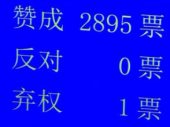
Phew – that was close! The National People’s Congress vote on Hong Kong’s New Improved Elections was: 2,895 for, zero against, plus one abstention (an ethnic-minority lady from Yunnan who had dozed off under the weight of her headgear).

In a now-familiar ritual of cringing self-debasement, every Hong Kong government department issues a press release to welcome the exciting news. (It doesn’t count as cringing self-debasement until the Govt Flying Service’s statement comes out.) Carrie Lam declares that ‘we will be able to resolve the problem of the [legislature] making everything political’. 

The proportion of directly elected seats in the Legislative Council looks likely to fall to what it was in 1991. But if it’s any consolation, your preferred candidates are barred from running – so it doesn’t really matter does it?

With no pesky pan-dems asking questions and opposing things, the government will finally be able to deliver affordable housing, fund hospitals and elderly care properly, and bring inequality to an end. So there’s that to look forward to.

Some reading for the weekend…

From CJR – Hong Kong journalists’ experiences under the NatSec Regime. Stand News has done something similar on censorship. And reflections of a young local journalist.

A CNN report on why foreigners are choosing not to visit China (now including Hong Kong)…

“If they’re willing to arbitrarily detain someone who was a very moderate, thoughtful academic, or a think tank type of person,” he adds, “then it’s difficult to see how anyone can feel safe.”

China Media Project looks at some fairly putrid propaganda surrounding the recently announced supposed ending of extreme poverty in China. 

And ASAN Forum ponders post-Xi China. (It’s a Korean think-tank – not bad.)

Finally, if you’re feeling too happy and cheerful and really want to be annoyed, try Wellcome to Hell – a gallery of produce in supermarkets pointlessly wrapped in plastic. 

Posted in Blog | 18 Comments

More on those ‘improvements’

An SCMP letter to the editor points out the absurdities of Beijing’s ‘improvements’ to the Hong Kong electoral system…  

…for any aspiring pan-democrat to be able to stand, they will have to be nominated by an unelected committee comprised of their opponents

Out of the mouths of babes and innocents – an Executive Council and NPC member tells RTHK that the ‘improvements’ send Hong Kong’s supposed political development back to handover times. 

A Bloomberg op-ed says Beijing is sacrificing credibility for control

…it’s a shift from democratic theater – where process is restricted, but still occasionally unpredictable – to democratic ritual.

There’s no longer a pressure valve for a population … no feedback mechanism, a basic requirement even for a tin-eared administration … no need to even pretend to bring citizens along

… [it] will mean even less open debate, less transparency and a poorer understanding of the cost-benefit analyses that underpin government choices. Society is silenced and press freedoms reduced, so it is harder to shine a light on problems and corrupt practices. It’s worse if courts too are called into question.

This isn’t about just having a compliant legislature. The CCP is not planning to eradicate oversight and criticism of government merely from Hong Kong’s weak elected bodies. The NatSec Regime and ‘patriotism’ tests are aimed at suppressing opposing ideas in the city as a whole – in the media, universities and civil society. Authority is not to be questioned, unless you want to be arrested for ‘picking quarrels’ or subversion. 

Since they are aimed at removing upward feedback or scrutiny, the ‘improvements’ will not be to the quality of governance. At some stage, popular anger will appear on the streets again, because there is nowhere else for it to go.

Why bother still having ‘elections’ in Hong Kong? Quartz offers some answers, including ‘competitive clientelism’ – encouraging the shoe-shiners to vie to display their willingness to grovel. 

Posted in Blog | 13 Comments