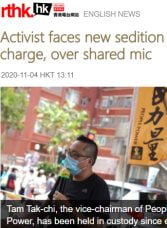
HK government resolutely stamps out ‘shared mic’ menace

Punctuation fans rejoice at RTHK’s headline ‘Activist faces new sedition charge, over shared mic’. The government is piling on sedition charges against pro-democracy broadcaster and activist Tam Tak-chi. Without the comma, the headline would suggest that all the charges have been over a shared mic. But thanks to the plucky little punctuation mark, it is clear that only the latest one is. 

RTHK’s editors are also taking care to be impartial. A sloppier writer (ie me) might write ‘Activist faces new sedition charge – over shared mic’. 

The government prosecutors allege that by passing someone a mic, Tam ‘conspired to utter seditious words’. This means ‘inciting hatred and contempt against the government’. A hyphen in that headline would imply a surprise – that something is amiss. It might implicitly suggest to readers that maybe it is the prosecutors, not Tam, who are encouraging hatred and contempt toward the government, and indeed further damaging the rapidly declining reputation of Hong Kong as a whole, perhaps making it look like the sort of place where consulates have plans to evacuate citizens and top officials excuse police perjury.

Fortunately for the government, RTHK is admirably grammatically correct and objective.

Posted in Blog | 6 Comments

HK Police remind everyone of their collusion with Yuen Long thugs

If you’re a police force that appears to have colluded with gangsters in violent attacks on members of the public – and you were bitter and angry about the widespread perception that you had – what could you do? For the Hong Kong Police, the obvious answer is arrest a journalist who uncovered significant evidence of the collusion on suspicion of a trivial and normally overlooked technicality. If anyone had any doubts about the cops being in cahoots with the thugs, they don’t now. It is also clearer than ever that the HKP are vindictive (let alone institutionally narcissistic and delusional about their own image).

RTHK producer Choi Yuk-ling allegedly applied for details of vehicle ownership (which is essentially public information) for a reason other than the vehicle/transport-specific ones specified on the Transport Dept’s website. (Details here.) Like many investigative journalists, she did this in the course of her work. In her case, making the documentary 7.21 – Who Owns the Truth? (English subtitles), which spells out the collusion and subsequent cover-up. If you haven’t seen it, the HK Police now direct your attention to it.

Inevitably, hundreds of commentators deplore the arrest as a threat to freedom of the press. This is like expressing shock and outrage, after witnessing a vicious tiger attack, that the creature had stripes. The HKP today is an arm of the CCP – of course it aims to curb freedom of the press.

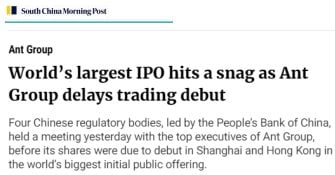
But it’s not personal! The wrathful CCP can also wreak vengeance (or ‘snag’, per SCMP) on non-state-owned fintech giants just about to be listed in the biggest IPO in history – as Jack Ma’s Ant finds out. This is murky, but it’s possible to see parallels with the Choi arrest. Panic, over-reaction, complete blindness to reputation, Hong Kong officials strutting around pretending to be on a par with London and New York left looking like idiots.

Posted in Blog | 8 Comments

Some Tuesday links

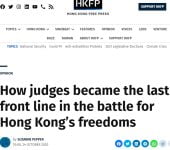
From Benedict Rogers – a sobering summary of the choices and limits facing HK’s protest movement. As he says, ‘the harsh truth has not yet sunk in for many’. Figures like Jimmy Lai and Joshua Wong are now essentially waiting to be thrown behind bars, and it is surely futile for others to risk joining them. 

And this is while we still have a reasonably independent judiciary. Jerome Cohen writes on the judges acquitting people charged (without anywhere near enough evidence) with ‘riot’. How long will the CCP tolerate such displays of rule of law? From Beijing’s point of view, the courts constrain state authority, belittle the police and prosecutions departments, and provide relief to people the CCP wants to humiliate and punish in order to intimidate the whole population.

HKFP offers a critique of ex-judge Henry Litton’s views on the Hong Kong judiciary. Does a good job of deciphering Litton’s ramblings and making them more coherent than they are in his own words.

One of Litton’s bugbears is judicial reviews, which he says are overused. He doesn’t ask why this is so. With no representative political mechanisms, and a cronyistic bureaucracy contemptuous of public opinion – even before Beijing introduced direct rule via the NatSec regime – JRs have been the only recourse people have apart from setting fire to things in the streets.

A kick up the backside for bores who blame the victims: a Taipei Times column saying that, contrary to the popular media narrative, China is not reacting to external events – it is making others react.

And a pic from a family member in the US passing her local polling station as it is being prepared for election day – in the spirit of inclusiveness, the warning is even spelt out for Korean speakers…

Posted in Blog | 7 Comments

Another reminder to pan-dems: abandon LegCo

The arrests of (mainly moderate) pan-dem lawmakers is hardly surprising. As clear winners of majority support from voters, they have a mandate the government clearly lacks. A flexible colonial ruler might consider absorbing them into the power structure – but instead they are living proof of the system’s lack of legitimacy. They expose the government’s shortcomings while occupying public office, and the new NatSec order does not permit such liberties. 

Participation in the joke legislature is futile: whatever you do, you are playing into the CCP’s hands. Meekly accept the rigged rules, and you play into their hands. Make a fuss and fight back, and you play into their hands. 

And what on earth is the Public Order Events Investigations Squad anyway?

Worth watching: RTHK Hong Kong Connection’s interviews with family members of the HK 12, with English subtitles.

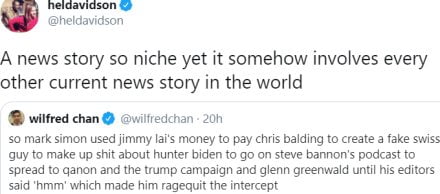
Perhaps worth avoiding: non-Twitter users have been largely spared, but users of the ‘hell-site’ are recovering from a massive mouth-froth eruption over the Mark Simon/Christopher Balding/Apple Daily/Jimmy Lai/Hunter Biden uproar mayhem scandal. Villains of the piece are the Next Media company gwailo (now – like some others in that noble profession – retired) and the former Shenzhen/Vietnam-based economist. 

Looks like they were so besotted with Donald Trump – and so in tune with the Republican Party’s apparent need to cheat in this election – that they concocted a harebrained scheme to make Joe Biden’s son look slimier than he really is. (Update: an explainer.)

While the attempted smear is aimed at a US audience, it resonates in Hong Kong, where many people hate the CCP, observe Joe Biden’s ‘senile Panda-hugger’ persona (and overseas leftists’  ‘soft on China’ leanings) and conclude that they should support Trump. Lai himself, for example. It’s all a godsend for the pro-democrat media tycoon’s local detractors.

For relief, surrealist video artist Vic Berger comes to the rescue, via Vice. They call it a ‘cinematic exploration’ of President Donald J. Trump. Others might describe it as a deranged medley of clips with special sound and other effects. Hallucinatory mushrooms recommended.

(Can’t help thinking of the work that went into making it. Is there a really user-friendly on-line video editing app? Hong Kong needs something like this.)

Berger also did one on Jim Bakker and Covid, and did lots more on Bakker because, seriously, how could you not?

Posted in Blog | 8 Comments

“What has Tony Chung actually done?”

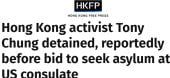
Few 19-year-olds can be as accomplished as Tony Chung, if the allegations against him are at all true. The former leader of pro-independence group Studentlocalism is charged with secession (under the NatSec Law), money laundering (under easy-to-abuse laws) and ‘conspiracy to publish seditious material’ (under an archaic colonial law put to extra-Kafkaesque use) – and denied bail. And officials rant about foreign countries scrapping extradition agreements with Hong Kong.

The BBC’s Stephen McDonell:

It’s only when you sit back and ask yourself, “What has Tony Chung actually done?” that you realise just how draconian Hong Kong’s state security law is.

…now people are seeing the reality: state security agents grabbing teenage activists from cafes and taking them away perhaps for the rest of their lives. On the ground in Hong Kong, the shocking reality of the new legal regime is becoming clear.

What are the chances of Stephen McDonell getting his visa renewed? ‘Sedition’ and visas are both mentioned in this interview with the NY Times international president on why the paper’s online HQ is leaving Hong Kong for Seoul. 

The Diplomat lists four signs that Hong Kong is headed towards totalitarianism. They are: increasing economic costs to pro-democrats (eg disqualification of professionals); weaponizing the courts; making democrats social outcasts (eg blackballing them from civil, cultural and other bodies); and restricting travel abroad. All are already detectable to some extent. 

A game – if you get bored of devising creative uses for the NatSec Stasi Hotline – is to consider other signs. For example, how long before lawyers don’t dare represent the likes of Tony Chung?

While we’re at it – John Burns in HKFP on what the appointment of new HKU vice-presidents tells us about how the CCP is running Hong Kong.

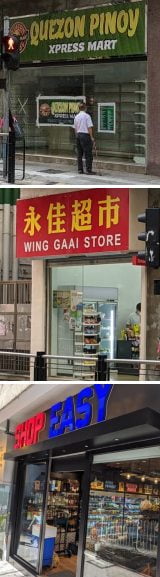
We end the week on a lighter note by celebrating the effects of falling rents, which have sadly reduced landlords in my neighbourhood to such penury that they must let premises out to shops that residents might find useful. Three have sprung up in recent weeks.

The Filipino place should be open now. Last I saw, they were stacking shelves with tons of garishly packaged chips and other snacks. We can probably also expect tamarind candy, fresh calamansi, and perhaps those not-exactly-compelling duck-embryo eggs.

The ‘Wing Gai’ store (next door) carries an opportunistic selection of goods, including flour, exotic cheap beer, some frozen stuff and of course more junk snacks.

Best of all (at the eastern end of the road) is Shop Easy, which is in fact an Indian store. It has ghee, paneer, poha, fresh produce (like green chilis), incense, dubious brands of whisky, and – downstairs – all the spices and dry goods you need.

If this is happening in Caine Road, it must be at least as good in other districts. All made possible by what officials bemoan as an economic crisis.

A selection of reading material for the gentry…

A quick thread on the history of the Milk Tea Alliance – from silly meme to international alliance. (And from The Nation, a lengthy but pretty good explainer on the background to Thailand’s uprising, including comparisons with the protests in Hong Kong.)

Tanner Green in PalladiumBelt and Road as a label for projects SOEs would have wanted to do anyway…

Poor investments that would have once drawn criticism, or at least extra scrutiny, by observers in China were now given a free pass, as few Chinese would risk tarring an initiative [Xi Jinping] had invested so much of his personal prestige into. Outside China, in contrast, critics would now credit sloppiness or malfeasance not to the failings of individual SOES or financial consortiums, but to the malevolence of the Chinese government.

One observer responds that it is now starting to be run more tightly

On the subject of back-firing, the Diplomat on how Beijing’s obnoxiousness is increasing regional public sympathy for Taiwan

…especially in Southeast Asia and India, because most have now experienced some form of coercion from China. 

…China’s sensitivity about Taiwan provides a ready handle for others to retaliate for unfriendly Chinese behavior. 

The Hill on how elite capture and United Front work have done such an effective job of disguising China’s threat to the West.

From Standpoint, Xi’s impatient war on religion.

And Bloomberg notes Taiwan’s impressive fight against Covid

So far, about 340,000 people have been under home quarantine, with fewer than 1,000 fined for breaking it. That means 99.7% have complied, according to Chen. “We sacrificed 14 days of 340,000 people in exchange for normal lives for 23 million people,”
Posted in Blog | 20 Comments

Do Carrie a favour and take your pangolin pills

At around the halfway point on Hong Kong’s journey from an open society to a banana-republic dictatorship, even the government has a hard time adjusting. As a puppet administration, it must impose oppressive policies; but the people are still free enough to speak out, and the local officials can’t shake off their old habit of making at least a pretence at listening and responding to them.

So there won’t be any public consultation on the plan to let Hongkongers over the border vote in Legislative Council elections. (It’s a CCP decision – of course there won’t be.) But independent media and pollsters still operate, and they confirm that popular opinion is against the obvious electoral gerrymandering. One day, the regime will simply silence such impertinent suggestions. But for the time being, the government must try and argue that the poll is wrong. And pretty pathetic it looks.

It’s almost as lame as health officials claiming that they can’t draw any conclusions from the fact that only 9% of recovering Covid patients accept ‘traditional Chinese’ (ie non-science-based) medicine, even when it’s shoved in their faces free of charge. The authorities can’t admit TCM is baloney, because the CCP regards its use as patriotic; but the public are free to point out how dumb it is for the government to pay for voodoo treatments, and the officials struggle for a coherent response. For now.

As we speak, 19-year-old Tony Cheung is due to appear in court, after being arrested (or re-arrested) on suspicion of sedition along with Yanni Ho, aged all of 17. The CCP are so afraid of 17-year-old Hongkongers they must threaten them with life imprisonment. 

They must also order your friendly local National Security Police to launch a snitch-on-anyone hot-line. The SCMP’s anonymous government source assumes that the city is full of loyal law-and-order freaks itching to inform on evil dissidents in our midst. Not sure how easy it will be to leave information anonymously. Obviously, such a system is ripe for abuse by malicious accusers – but it works both ways. The potential for ‘well-intentioned’ creative, theatrical, karma-serving or other tip-offs to the Stasi could be considerable.

Posted in Blog | 10 Comments

Banana republic forming nicely

Is HKU about to be the first university in town to have a CCP member in a top position? HKFP report on two appointments. Ying Chan looks into the background of one – Prof Zuo-jun ‘Max’ Shen. Max says his old university’s website named him a Party member without his knowledge, so maybe the fuss is making him Mad Max. Unless the English name is a typo and is in fact ‘Marx’. Whatever.

Meanwhile, Hong Kong’s descent into banana-republic status enters the grabbing-people-trying-to-enter-foreign-consulates stage, and the arrests-for-social-media-posts-that-might-split-the-country stage. Despite a rising number of arrests under NatSec and archaic sedition laws, none of these cases have yet reached the courts. It will be interesting to find out whether 19-year-olds (indeed 17-year-olds) on Facebook actually threaten the security of the world’s second-biggest military power.

Posted in Blog | 10 Comments

The NatSec Regime in practice

Some Hong Kong pro-democrats still like to imagine that, even under the Leninist principles of the NatSec Regime, the Legislative Council can be a representative body with at least a little political power. Maybe they will get real after reading that Beijing (via the local puppet government) will further rig the assembly’s membership by ramming through new laws to give Hongkongers living over the border a vote (while those elsewhere overseas do not, and nor can anyone use a postal ballot). 

This will mobilize maybe another half million votes. This electorate will be in a place where only pro-Beijing parties’ workers may canvass (indeed, visit), and we can expect the location of polling stations to suit their needs too (with transport and lunchboxes thrown in). The CCP will also no doubt allocate pliable voters to the constituencies where their votes are most needed. If they want, they can easily just stuff ballot boxes.

This confirms that the CCP is determined to ensure LegCo plays a purely ceremonial rubber-stamp role – though it wants the process to continue to look like a genuine democratic one. It also shows that the pan-dems are wasting their time giving the body legitimacy by staying in it.

Some other things from the weekend…

A pressure group finds strong evidence that New Territories residents are illegally selling archaic ding rights – allowing indiginous males to build a house for personal use – to developers. And pro-Beijing lawyer Junius Ho is upset that his practitioner status in England is under threat. The link between the two stories: Ho does property paperwork in the New Territories.

A thread reporting on the on-line rally in support of the HK 12 held in the Mainland.

And HKFP on what the NatSec Regime means in practice as…

…a fascinating  historical replay … of the old-style rectification campaign … after 1949 to dismantle all the old sources of authority and create a new revolutionary order.

Before their 1997 return to Chinese rule, Hongkongers had been promised they would not be subjected to those same kinds of disruptive upheavals. But since June 30, the old urge to try and remake society to Beijing’s liking is evident everywhere: in the language of official discourse, the demand for professions of loyalty from civil servants, the scrutiny of candidates for elective office based on past behaviour, and scrutiny based on behaviour while in office. The press, churches, schools, teachers, students – nothing is off limits, no one seems to be exempt. Labeling and targeting are the new norms.

And the independent judiciary is a major target. The key thing to bear in mind about the NatSec Law is that it is not a ‘law’, but an entire new CCP-run system of government.

Posted in Blog | 10 Comments

Some links to end the week

Westerners who are outspoken blue-ribbons are especially unpopular in some pro-protest movement circles, and the classic example last year was retired businessman Peter Bentley, who has died. (It says so here, so it must be true. Typo in the column – Nury means July 2019, not ‘last July’.) 

I met this guy several times, and as the videos show, he was a bit of a crusty and forthright character. Kind of amusing to be with, but you were glad to get away. From Bristol, England, he was one of the pioneer managers to go ‘into China’ in the 80s-90s. I think he ran some sort of metal-products factory in Wenzhou, and married there.

He was impressed by China’s development and was a fan of the CCP. He once mentioned considering joining the pro-Beijing DAB party. He also totally believed the ridiculous Gavin Menzies books claiming that the Chinese beat Columbus to the Americas and got to the Mediterranean. Last time I met him he was equally enthusiastic about a supposed discovery of the tombs of Jesus Christ’s family. 

Some assorted links to end the week…

Jerome Cohen – the National People’s Congress Standing Committee didn’t clarify Article 38 (the extraterritorial stuff) of the NatSec Law at its last meeting. 

An SCMP editorial asks (way too gently, but still) why the Hong Kong government has taken fright of the first microscopic signs that home prices might weaken and scrapped a plan to tax developers’ vacant apartments. Sadly, the paper is too timid to speculate about possible reasons.

HKFP have put together a digital archive of the materials that will probably disappear in the new Hong Kong Story exhibition at the History Museum.

A quiz on Hong Kong landmarks from M+ (I got 8 out of 10).

Vivienne Chow in ArtNet News on the protest/NatSec generation of young Hong Kong artists.

Zolima Citymag on the history of the State Theatre in North Point. It must have looked amazing in the low-rise 1950s, but I can think of dozens of more impressive structures worth saving. Unpopular view: despite its undeniable heritage/social-history role and some unique architectural features, this is a building that screams ‘tear me down’ – at least without major refurbishment. 

A report on the ideological side of China in Africa – executive summary worth a read if you’re interested…

Instead of offering a proactive ideology, the CCP acts as a PARTNER or MENTOR in illiberal governance.

From Project Muse, a report on China’s many efforts to impose ‘ideological discipline’ overseas.

People seriously discussing a full-blown Chinese invasion of Taiwan. This would be a mini-Operation Overlord. Pre-positioning the men and equipment would take months and be impossible to hide. If Beijing was deluded enough to do it, Chinese forces would risk significant losses. The CCP could fall from power. You almost wish they’d do it. Discussion of why it almost certainly won’t happen here.

In other totally unrelated news: the great James Randi – who debunked Uri Geller, water diviners, faith healers and other swindlers – has died aged 92. And similarly-aged Tom Lehrer (my father introduced me to his songs) thinks ahead and puts his whole work in the public domain. Sample lyric from I Wanna Go Back to Dixie: “The land of the boll weevil, Where the laws are medieval…”

Posted in Blog | 17 Comments

‘Integration’ = absorption = neutering

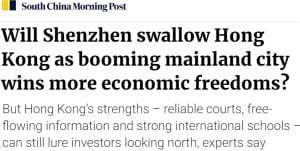
Following the Emperor-for-Life’s recent visit to Shenzhen, lots of scary-sounding stuff about how Xi Jinping is favouring the Special Hub-Zone over Hong Kong, Shenzhen is ahead, blah blah. 

After SARS in the mid-2000s, Hong Kong officials tried to divert attention away from ‘politics’ (ie bad governance) by launching a contrived campaign of alarmism about the city’s supposedly declining competitiveness vis-a-vis Shenzhen and Shanghai. Skeptics replied that the whole purpose of Hong Kong since the 1840s has been to serve as a location where you can do things you cannot do on the Mainland. There is no point in Hong Kong trying to rival Mainland cities at their own game.

Since the CCP can’t tolerate a free press, independent judiciary and free flow of capital on the other side of the border, Hong Kong’s distinct advantages and roles should be secure. The Leninist system that keeps the party in power in the Mainland also prevents the Mainland economy from evolving to compete with Hong Kong (or surpassing middle-income status generally). Without serious institutional reforms that weaken CCP control, a Mainland city can’t ‘overtake’ Hong Kong, regardless of the size of its GDP or its tech industry.

But of course you can reverse the process by tightening CCP control in Hong Kong – weakening independent institutions – and bring the city down to the Mainland’s level. 

Officials (and many commentators) frame this discussion around visionary economic Bay Area-type plans – hence official denials that Beijing is engineering the sidelining of Hong Kong. However, it is not about economics. Whatever sidelining now happens will be a side-effect of the real project: to eliminate Hong Kong as a political threat to the CCP. 

Posted in Blog | 12 Comments