Hong Kong’s Chief Executive sets up a Council of Advisors…
…to advise [him] on the strategic development of Hong Kong, leveraging on opportunities from national and global developments. The formation of the Council is particularly timely and crucial, as Hong Kong is now on the path to resume normalcy after the pandemic, seeking to rekindle momentum to return to the international stage as the most effective gateway between the world and the country.
It is to be chaired by the CE himself, and comprises three sub-groups containing a lot of familiar names. In the ‘economic advancement and sustainability group’, at least six of the 11 members are sons (or daughter or son-in-law) of a tycoon. These are not generally people with an interest in new ideas on – say – overhauling Hong Kong’s land-use/housing policies or questioning the value of mass tourism.
This is the latest in a series of advisory bodies like this; Tung Chee-hwa set one up soon after the handover (if memory serves, it included Rupert Murdoch), and little came of it. It looks more like a way of co-opting some prominent figures, making them feel important, and keeping them onside. (And we already have a body that does that – the Executive Council.)
The new Council is 91% male – much to the relief of numerous tycoons’ daughters, no doubt.
One thing the new Council will probably not recommend is learning from past public-health performance. Surprisingly gutsy SCMP op-ed by public policy professor Donald Low on why Hong Kong authorities should allow an objective review of their handling of Covid…
…throughout 2022, Financial Secretary Paul Chan referred to “the ongoing pandemic” to rationalise Hong Kong’s abysmal GDP performance. A moment’s introspection would lead to the obvious conclusion that the pandemic, which was ongoing everywhere else, was not to blame but it was Hong Kong’s excessive Covid restrictions (justified by the need to mimic the mainland’s zero-Covid stance) that delayed the city’s recovery by at least a year.
In a similar vein, when questioned by reporters on why Hong Kong’s Covid death toll was so much higher than Singapore’s, Health Secretary Lo Chung-mau deflected and said that Hong Kong had an older population.
But … Japan has an older population and still had a much lower death toll than Hong Kong. In any case, Singapore’s elderly population is not significantly younger than Hong Kong’s to explain why it had far fewer Covid or excess deaths.
…Singapore’s performance in handling Covid-19 was among the best in the world. A commission of inquiry is not needed since there were no clear instances of governmental incompetence, ignorance, or ideological thinking. The same cannot be said of the Hong Kong government.
…Given how much Hong Kong’s ruling class has become far less diverse and less tolerant of dissent and criticism in recent years…
In short, it is precisely because a truly independent inquiry would raise very uncomfortable questions for those in power that might challenge the veneer of competence and objectivity that they wish to preserve, that even suggestions of it cause annoyance to government leaders.
While he mentions Beijing’s role in influencing local Covid measures, he doesn’t spell out that the central government’s local overseers would not countenance an independent inquiry.
Some worthwhile reading from the weekend…
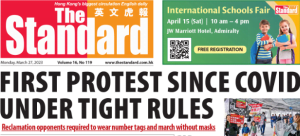
HKFP op-ed on the much-diminished post-Covid right of assembly in Hong Kong.
Tribute to Jiang Yanyong, the doctor who exposed Beijing’s cover-up of SARS in Beijing in 2003 – by the Time correspondent he talked to.
CNN on the changing stature of Taiwan’s aboriginal people.
For econ nerds, an interesting thread on how Ireland’s GDP has more than doubled in size in 10 years – yet the Irish are little better off.