NatSec police see the writing on the wall

An 18-year-old is arrested for allegedly writing ‘seditious’ messages on the wall of a men’s room at Hong Kong China City…

According to the police, the messages were deemed to have provoked hatred, contempt or disaffection against the constitutional order and the executive, legislative or judicial authorities in Hong Kong. The contents also incited other people to commit illegal acts, the police alleged.

Were they messages or essays?

“Police remind members of the public that ‘doing with a seditious intention an act or acts that had a seditious intention’ is a serious offence. Offenders shall be liable to imprisonment for seven years on first conviction. Members of the public are urged not to defy the law,” the statement read.

Some reports are saying that the guy wrote ‘Liberate Hong Kong’. 


If that counts as seditious intention (squared?), what about the Hudson Institute’s new paper on ‘Preparing for a post-CCP China’? From the synopsis…

While the People’s Republic of China (PRC) has weathered crises before, a sudden regime collapse in China is not entirely unthinkable. Policymakers need to consider what might happen and what steps they would have to take if the world’s longest-ruling Communist dictatorship and second-largest economy collapses due to its domestic and international troubles. 

The whole thing is a 128-page PDF referencing – among other things – the Zhou Dynasty. I just skimmed.


Asia Times does a pithier take

But does this [list of economic and other problems] translate into active opposition within the Central Committee—the body that could potentially remove Xi? No. Because these officials believe that to fix the problem, they’d need to remove the “big man.” But this is a highly hazardous operation, attempted a few times with no success, and often leading to the demise of the rebels.

Moreover, there’s a broader calculation at play. The system is built around the emperor—if you bring him down, will the system survive? If it doesn’t, the officials risk losing their posts along with the leader. As an act of self-preservation, they defend the emperor, no matter what.

The middle class is in a similar situation: their homes have lost half of their value, and their savings have diminished dramatically. But half is better than nothing—especially in the event of a revolution. They still have a lot to lose, and revolutions are fought by people who have nothing to lose but their chains.

Posted in Blog | 3 Comments

‘People channels such as disinformation and the arts’ alert

Hong Kong’s Security Secretary wants civil servants to identify and respond to ‘soft resistance’…

In a newspaper interview published on Tuesday, Secretary for Security Chris Tang said foreign interference in local affairs has become more diverse and covert as Hong Kong takes on an increasingly prominent position on the global stage.

The government says “soft resistance” involves people channels such as disinformation and the arts to divide society through public opinion and to try to cause distrust or hostility towards the authorities.

Compared to “hard resistance”, it is more difficult to guard against “soft resistance” due to its infiltrating nature, Tang added, while vowing to work on various fronts to safeguard national security.

He said the administration will release new guidelines for civil servants as soon as possible, outlining how they should fulfil their duty in safeguarding national security.

One such way, Tang said, is paying close attention to the emergence of “soft resistance” and taking proactive countermeasures.

We are still none the wiser about what ‘soft resistance’ actually is. It is nowhere, yet it is all around us. It is apparently not illegal, but it is a serious threat. It might involve the arts. It tries to ‘divide society through public opinion’. (What if ‘soft resistance’ is public opinion? What if it is simply ‘society’? What if the problem is people in charge who see the public as a threat?)

What is even less clear is what civil servants are expected to do to respond to it. If, as seems likely, much ‘soft resistance’ is in fact simple criticism of the government, maybe officials could try proactive countermeasures like listening to complaints, and acting to make sure the government does a better job, thus leading to greater public satisfaction. Just an idea. Or is suggesting such a thing ‘soft resistance’?

Posted in Blog | 6 Comments

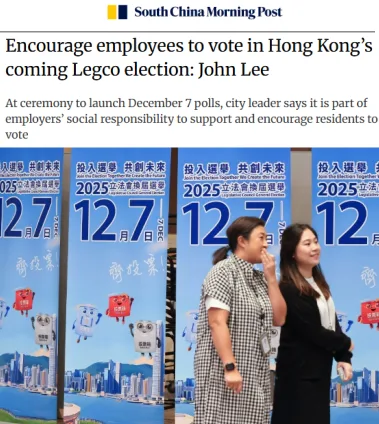
LegCo election excitement starts here

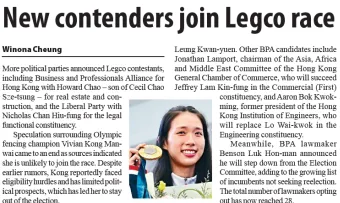
The government is budgeting HK$1.2 billion for December’s Legislative Council election. The body these days has 90 members, but only 20 of them are returned by popular vote. Another 30 represent functional constituencies, returned by small-circle groups comprising mainly non-human entities. And 40 are returned by a small-circle ‘election committee’. The whole chamber is ‘patriots-only’, with all nominations subject to a screening process; in 2021 many seats were uncontested and voter turnout for the directly elected seats was barely 30%.

In December, there will almost certainly be no opposition candidates on the ballot, and it is likely the bulk of the public will take little interest. The new-style Legco election is, after all, designed to ensure they have no meaningful participation or input: they’re not allowed to vote for most seats, and the candidates they would want can’t take part anyway. There must be a cheaper way for the executive to install its own legislative branch. And…

Another HK$200 million would be needed for the Election Committee subsector by-elections on September 7.

How much can this cost?


On the subject of diverting tax-payers’ money into performances

Over 100,000 Japanese seafood and aquatic products scanned for radiation in nearly two years since Hong Kong restricted imports due to the discharge of treated water from the Fukushima nuclear plant, with exactly ZERO found to exceed WHO safety levels


From China Unofficial Archives – how Lau Chun Kong came to write Dark Night in Yuen Long on the 7/21 attack.

Posted in Blog | 8 Comments

Why are popular eateries popular?

The SCMP notices the success of two dishes-plus-rice (mostly take-away) restaurants and asks: ‘Why are Hong Kong eateries selling ‘poor man’s meals’ bucking closure trend?’ 

The paper’s sleuth-like reporters solve the mystery…

The growth of such businesses has defied a wave of closures among food and beverage establishments in Hong Kong…

…Gary Ng Cheuk-yan, a senior economist at the Natixis Corporate and Investment Bank, said the rise of this-this rice dining’s popularity over the past few years was largely due to the affordable prices amid broader economic uncertainties.

“Such economic uncertainties mean that consumers are much more prudent when spending, choosing more value-for-money options,” he said.

Who would have thought that entrepreneurs could do well – and even pay some hefty rents – by offering what customers want at prices they find attractive? (Perhaps management theorist Peter Drucker, who defined a company as ‘an organization that makes a profit by meeting a public need’, or something like that.)  

As one customer explains, it’s not simply price, but convenience and genuine appeal…

…“I have a soft spot for this-this rice. I come here for lunch two to three times a week as it’s the closest thing to home cooking.

(Also, I would add, a great way to get quick rice and greens to go with a protein dish you’re making yourself.)

The people behind these no-frills lunchbox places seem to have two things in common. First, they are not civil servants or op-ed writers desperately wondering how to stop Hongkongers from shopping in Shenzhen. And second, they did not open independent bookstores.


Which brings us to an HKFP report on recent tax audits for small bookshops…. 

The directors of the five companies spoke to HKFP on condition of anonymity due to fear of reprisals. While the IRD has completed audits of some companies, others are still under investigation. Among the five, three were established over eight years ago, while two were set up within the past five years.

Brian, a director of an independent bookshop that opened less than half a decade ago, told HKFP that the IRD informed him the company was under tax investigation in late 2024, soon after the company filed its first tax return. 

“Our accountant found it strange. While the IRD can probe tax affairs over the past seven years, it is uncommon for the IRD to investigate newly established companies,” Brian said in Cantonese. “Ours is such a small-scale operation, and the profit is small; is it worth auditing from an economic perspective?” 

…Lily has been running an independent bookshop for more than eight years. Since it was established, business has been tough, recording losses in most financial years. The IRD had never investigated her company until early last year.

According to an IRD document Lily showed to HKFP, the tax authorities began probing the company’s tax assessments over the past six years. It took the bookshop almost a year to answer all the questions from the IRD. 

Lily said the audit was completed late last year after the company was fined “a tiny amount of money” for some understatement of income. 


AP on the new regulations expanding restrictions on prison visits…

Under the new rules, effective Friday, magistrates can issue warrants on application by correctional service officers to bar exchanges between specific legal representatives and persons in custody if the judges believe such connections could harm national security or cause bodily harm to any person, among other reasons.

The department can also restrict certain visits, including those made by specific chaplains, for purposes such as maintaining national security, preventing crime and facilitating inmate rehabilitation.

…In a discussion of the changes with lawmakers this month, Hong Kong Secretary for Security Chris Tang said some prison visitors specifically went to see inmates who were jailed for their roles in “the black violence” — a phrase officials use to describe the 2019 protests — and they continued to stoke anger against the government. 

…Brandon Yau, secretary of the prisoner support group Waiting Bird, said it seemed some authorities believed former demonstrators of the 2019 protests were still planning organized resistance in jail, but that it doesn’t match reality.

…“It seems they (authorities) are doing something further to create an atmosphere that they would continue to target and suppress the political prisoners who were convicted for their roles in the social movement,” he said.

Posted in Blog | 3 Comments

Earthquakes for landlords only, please

Irrational fears I have seen displayed by Hongkongers: not walking on a footpath along a field in England because there were a dozen dairy cows 200 yards away; refusing to stay in a venerable old hotel in Vietnam because of ‘ghosts’; turning down a very nice government apartment (choosing one provided for more junior civil servants) because it had a view of a cemetery; and avoiding fish from anywhere in the world after the Japanese tsunami of 2011 because of ‘dead bodies in the sea’. 

Now the number of Honkongers visiting Japan drops by 33%, causing scheduled flights to be cancelled, because a manga artist years ago predicted an earthquake for this month.


Well, no-one likes earthquakes. On the other hand, we all (or mostly) love property-value disasters…

A noteworthy story on shop rents from the SCMP

A 1,036 sq ft shop on the ground floor of 50-52 Russell Street was leased to Skechers for three years at a monthly rent of HK$360,000 (US$45,860), or HK$347 per square foot, according to Rickey Chan, managing director of Dorbo Realty.

Agents said Patek Philippe’s lease had it paying HK$550,000 a month, meaning Skechers was paying 35 per cent less than the Swiss watchmaker, though the monthly rent once surged to HK$1.86 million when the market was at its zenith.

That was in 2018. In other words, the rent is less than a fifth of what it was seven years ago. Some people might look at this and be shocked at the massive decline. Others might wonder what kind of lunacy took hold when someone signed a lease at nearly HK$2 million for a 1,036 sq ft space. 

(Are there any real-estate agents not called Ricky?)

And Bloomberg reports that New World wants to sell its ‘flagship’ (as in ‘white elephant’) mall out near the airport…

The company has held early-stage discussions with the Hong Kong airport authority on its plans, the people said, requesting not to be named because the matter is private. The talks are preliminary and subject to change, the people said.

The mall has been evaluated at a price range of HK$15 billion ($1.9 billion) to HK$17 billion, one of the people said. That means selling at a loss considering the company invested HK$20 billion for the project.

Ouch, ouch, ouch.

Even if Hong Kong had continued to attract tens of millions of Mainlanders buying luxury goods – a big if in itself – it still never made sense to put a giant mall outside an airport in a spot miles from anything else. People on their way to catch a flight do not leave early to go shopping before checking in. People who have just landed even less so. 

Now, the only possible way to attract traffic will be to offer unique and affordable mass-market attractions that could, conceivably, lure local people from the western Kowloon/NT region. But that would imply low rents, which in turn spells financial ruin for whoever owns the place.

Which brings us to the intriguing question: who on earth is going to buy the thing?

Posted in Blog | 12 Comments

A warning from friends of Jimmy Lai

An op-ed by Mark Clifford in WSJ

Publisher and freedom fighter Jimmy Lai has been behind bars in Hong Kong since the end of 2020—more than 1,650 days. Hong Kong insists all is well with Mr. Lai and rebuts any claims to the contrary. Meantime, the government lashes out at critics who question Mr. Lai’s continuing national-security law trial—which could see him jailed for life—as well as his conditions in prison. Late last month the Hong Kong government assailed “foreign politicians, anti-China organisations, and various media” making “irresponsible and absurd remarks, distorting the truth” about Mr. Lai’s case, “with the intention of perverting the course of justice.”

Why is Hong Kong so aggressive in responding to questions about Mr. Lai? The answer lies in the absurdity of holding a 77-year-old newspaper publisher in appalling conditions while he is being tried on sham charges.

Next week’s weather forecast for Hong Kong calls for temperatures in the 90s and 95% humidity. It will feel as if it is more than 100 degrees. In Mr. Lai’s un-air-conditioned windowless cell, it will feel even hotter. That is neither safe nor humane.

…Mr. Lai is a British citizen. He hasn’t had Chinese papers since he left the country in 1961, when he was 12. Yet Hong Kong refuses to give the British government consular access to Mr. Lai, in violation of international diplomatic conventions. The refusal means that no British diplomat has been able to meet Mr. Lai during his more than 4½ years in prison.

Hong Kong officials seem scared even of Mr. Lai’s image. The last photo of him was taken two years ago by an Associated Press photographer, who was then tossed out of Hong Kong. Since then, authorities have used umbrellas and tarps and even boarded up a window to make sure that the world doesn’t get another look at Mr. Lai during his 50 minutes of outdoor exercise a day.

Mark Simon (a former deputy at Next Media) writes

As I watched the daily news reports of Jimmy Lai’s NSL trial it became obvious, as it has now become to Beijing, that Mr. Lai opposed the violence [of 2019; one of his alleged crimes is sedition]. That truth won’t help him with Hong Kong authorities, as a conviction is a must. But inside the CCP in Beijing, there is a growing unease with the brutal treatment of a 77-year-old in custody. A man who becomes a martyr if he perishes behind bars. As one CCP diplomat told a businessman who dared to bring up Jimmy; “He dies, Hong Kong pays for decades”.

The Hong Kong government knows this, and that is why we were treated on June 30th at 23:19, the day before the July 1st National Day, to a late-night press release, meant more for Beijing than the West. A release that ended with but was centered around 500 words claiming Hong Kong authorities are treating Jimmy Lai well. [See following link.}

…Jimmy Lai, my boss, is willing to depart Hong Kong. He is 77. The CCP has taken his business, taken his freedom, and damaged his health. He’s not going to bend, but he is willing to leave. His departure, just as with the departure of other political prisoners frees not only those non-violent activists held in prison, but it also frees Hong Kong from the cost of the violence needed to hold political prisoners in the face of international condemnation and the penalties that come with that condemnation.

Hong Kong is ready to move on. Hong Kong is ready to free up its economy. But first, Hong Kong needs to free its political prisoners.

(The end-June Hong Kong government statement saying – last few paras – it is ‘committed to ensuring that the custodial environment is secure, safe, humane, appropriate and healthy’.) 

As both articles say, Lai’s death in prison would be a serious blow to Hong Kong’s image. Simon in particular suggests that Hong Kong’s authorities are determined to keep the Apple Daily founder in prison, while Beijing officials perhaps differ. This implies that Hong Kong’s leaders would flout Beijing’s wishes, which sounds hard to believe. It could be that there is internal debate somewhere in the power structure about the prospect of having a martyr on their hands. The local, as well as overseas, reaction might worry them: think of the potential for quite large-scale ‘soft resistance’ – eg, everyone wearing black – when Lai’s coffin is being moved, or the funeral takes place.

And here comes another

The [HK government] today (July 16) strongly condemned various organisations in the United States and Western countries for, once again, disregarding the facts and slandering and smearing the HKSAR Government for handling in accordance with the law the case of Lai Chee-ying involving the Hong Kong National Security Law and related custodial arrangements. Their remarks fully exposed the malicious and despicable intentions of anti-China organisations and media from the US and Western countries to undermine the rule of law in Hong Kong.


In HKFP, the latest from the HK47 appeals…

Lawyers for Owen Chow and Winnie Yu argued that the three trial judges had exercised “excessive judicial intervention” and had prevented the pair from having a fair trial.

…Steven Kwan – representing Chow, who was sentenced to seven years and nine months in jail – said the trial judges had repeatedly intervened in the examination of the defendant by his own counsel during his oral testimony.

“On the first day, Kevin Chan [Chow’s counsel during the trial] was only able to ask 112 questions. The bench asked 153 questions,” Kwan said, adding that the judges asked 45 per cent of all the questions posed to Chow during his entire testimony.

…Robert Pang – representing Yu, who was sentenced to six years and nine months in jail – made a similar argument and said the judges “repeatedly descended… into the arena and disallowed questions.”

“From the very beginning of the examination-in-chief, counsel had been stopped by the bench,” Pang said. “By question 15, the court had started stepping in.”

Posted in Blog | 11 Comments

More on the HK47 appeals

Amnesty International releases a statement

…China Director Sarah Brooks said:

“The Hong Kong 47 case stands as one of the most shocking examples of the crackdown on human rights in the city.  This appeal hearing is a chance for the courts to start righting the wrongs of this unprecedented mass prosecution.

“Research findings we released earlier this month show that the vast majority of convictions under the National Security Law have targeted legitimate expression. It is appalling that Hong Kong courts could condone a crackdown that leaves more than 80% of defendants wrongfully languishing behind bars.

“This appeal is a pivotal test—not just for these 13 individuals, but for the future of freedom of expression in Hong Kong. Only by overturning these convictions can Hong Kong’s courts begin to restore the city’s global standing as a place where rights are respected and where people are allowed to peacefully express their views without fear of arrest.”

…To treat self-organized “primaries” conducted by political parties to select candidates to put forward for elections as a genuine threat to Hong Kong’s existence, territorial integrity or political independence does not meet the high threshold of application for “national security” that international human rights standards require.

Research published last month by Amnesty International, on the fifth anniversary of the National Security Law’s enactment, found that more than 80% of people convicted under the law have been wrongly criminalized and should never have been charged in the first place.

The national security laws (it says ‘national’) refer to the whole country, so the HK47 were presumably accused of threatening China’s existence, etc. Which makes the prosecutions even more, shall we say, striking.


From HKFP – a look back at the League of Social Democrats, including the LegCo banana-throwing shock horror outrage of 2008. Rather than hurl the fruit at Donald Tsang, Long Hair tossed it to the floor several yards in front of then-CE Donald Tsang. It was the lamest banana attack in history, yet everyone acted like it was an assassination attempt.

Posted in Blog | 4 Comments

HK 47 case still not over

Twelve of the pan-dems found guilty of subversion after taking part in the camp’s 2020 primary election are appealing their verdicts…

The [Appeal Court judges] will hear appeals against convictions and sentences faced by 12 defendants, including ex-lawmaker “Long Hair” Leung Kwok-hung and journalist-turned-activist Gwyneth Ho.

The dozen were found guilty after trial and, last November, were sentenced to prison terms ranging from six-and-a-half years up to seven years and nine months.

And the government is appealing in the case of Laurence Lau, one of just two of the 47 who were acquitted…

Deputy Director of Public Prosecutions Anthony Chau told judges Jeremy Poon, Anthea Pang, and Derek Pang that the trial court “erred” by failing to find that Lau agreed to a scheme, which aimed to veto the government’s budget once elected as lawmakers, ultimately forcing the resignation of the chief executive and a government shutdown.

The trial judges also made a mistake when they ruled that Lau did not have an intention to subvert the state power, the prosecutor said.

The second HKFP article has updates on the other appeals…

On Monday, lawyers for some of the appellants began to make a joint submission, arguing that the act of vetoing government bills, including the budget, was not an abuse of a lawmaker’s power.

The trial court had sided with the prosecution and ruled that voting against the government budget indiscriminately was in breach of the powers and functions of the Legislative Council.

Representing former legislators Helena Wong and Lam Cheuk-ting, barrister Erik Shum said lawmakers who take into account political agendas when they vote for a bill “could not possibly” be seen as abusing their power.

…Shum’s arguments were echoed by Trevor Beel, barrister for journalist-turned-activist Gwyneth Ho. Beel told the court that the word “indiscriminate” was never used by the defendants, but rather was a term adopted by the prosecutors in the case.

Those who took part in the primaries only stated openly that they would “proceed with a mandate,” which Beel said was “clearly given to the people.”

“If their mandate was not considered by the government, then they would proceed to vote against the budget. That’s not an abuse of their power. That’s an exercise of their power,” he said.

This is the heart of the matter: can a plan to use powers clearly provided in the Basic Law be ‘subversion’?


From a US-based YouTube Chinese food channel, a look through a 1930s English-language Hong Kong pocket guide to Cantonese cuisine. She shows many pages clearly – so you can read a lot of it. Includes a list of restaurants at the time. Some of the dishes are familiar, while some are dated and others pretty much defunct. See the description of ‘three varieties of snake with wild cat’ (our old friend the palm civet)

Posted in Blog | 2 Comments

3.1 suicides a day

Hong Kong in 2024 had more suicides than in any year since 2003 – when the city endured the depths of the post-97 property crash, SARS, a mass protest against the proposed Arttcle 23 NatSec law, and the death of Anita Mui. Among the suicides, Leslie Cheung leapt from the Mandarin Oriental and another (pretty sure it was 2003) was a young overweight woman with no friends who threw herself from her family apartment after her father chucked her pet hamster away. For some reason, that two-para story stuck with me.

The SCMP says

The Samaritan Befrienders Hong Kong released the findings of its analysis of the Coroner’s Court’s data, which showed a 4 per cent rise in the number of deaths from suicide compared with 2023. It urged society to maintain its focus on mental health and called for enhanced preventive efforts and support services.

Heymans Wong Hon-chi, the organisation’s chairman, said the suicide rate hit 15.1 per 100,000 people last year, the highest since 2003, adding that there were about 3.12 suicide deaths per day in Hong Kong on average.

He said the suicide rate among men aged 30 to 39 rose from 19.05 in 2023 to 24.38 last year. The rate for men aged 40 to 49 increased from 22.06 to 27.46.

“Men generally pay close attention to the economy and their employment prospects. We all know that the overall economic situation last year was not at its best or most ideal,” Wong said.


Chris Yeung at Voice of Hong Kong foresees ‘constitutional chaos’ in Hong Kong as lawmakers oppose government efforts to allow some basic rights for same-sex couples following a court ruling…

The John Lee administration has only themselves to blame. Their failure to attempt to consult the lawmakers on their proposal before putting it forward in a paper has added fuel to the fire. Worse, it makes a mockery of their repeated vows to foster closer ties with the legislature.

…During the meeting on Thursday, many members in the “all-patriots” Legislative Council slammed the proposal, “calling it an attack on the institution of marriage.” Leaders of major political parties were furious, accusing the government of lacking consultation.

…As same-sex marriage is not recognised in the mainland, political correctness seems to have further hardened the stance of the two major pro-Beijing parties, namely the DAB and FTU, on LGBTQ rights.

Intriguingly, the two major Beijing-backed dailies, Ta Kung Pao and Wen Wei Po, have not touched on the government proposal in their editorials as of Saturday. Some columnists in pro-Beijing media have called for a calm debate, saying the government plan was a “middle-of-the-road” solution.

Whether Beijing has a view on the government plan and, if so, what it is, is still unclear. But so far, there are no signs of Beijing intervening through an interpretation of the Basic Law as Junius Ho Kwan-yiu, a legislator, has suggested. The chance of it is slim.

…The proposal has emerged as the first looming clash between the Lee team and the legislature with the judiciary being blamed by some pro-Beijing figures as the trouble-maker.

If the plan is vetoed, it will deal a blow to the executive-led system and a slap on the face of the CFA. The government may face fresh challenges in courts for its failure to uphold LGBTQ rights.

Most Hong Kong people are laid back about this issue – not out of ‘woke’ convictions so much as a traditional disinterest in other people’s affairs. So why do so many ‘all-patriot’ lawmakers have this hang-up about gay rights? Could it be that some are overtly homophobic, or at least pro-’family values’, as a way to mask their own moral shortcomings? Is there an anti-Western sentiment at play? Is this an opportunity to bash judicial independence? 

As for Beijing officials, it is unlikely that they see this as a priority one way or another. Communist parties have always had a puritan streak, but Beijing’s real worry – in Hong Kong or the Mainland – would probably be the formation of independent social or political movements. For there lies the road to ‘soft resistance’ and thence ‘challenging the government’. That goes for lawmakers: ultimately, the DAB and others will do what they are told, and there will be no ‘constitutional chaos’.

Maybe one day some of these lawmakers will come to terms with themselves, emerge from the closet, and start up a United Front gay group. Or maybe not.


HK Labour Rights Monitor on the fifth anniversary of the NatSec Law

Five years ago, Beijing imposed the Hong Kong National Security Law (NSL), under the pretext of safeguarding “national security”, to silence dissent and dismantle civil society. In 2025, the Hong Kong government further tightened its grip, fast-tracking amendments to the Trade Union Ordinance, effectively locking down independent union activities. Under relentless political purges, draconian laws, and constant administrative harassment, independent unions in Hong Kong are now on the verge of collapse.

Christopher Mung, Chief Executive of the Hong Kong Labour Rights Monitor, remarked: “In these five years, the right to organise, once protected under Hong Kong’s Basic Law, has been systematically dismantled.”

The amended Trade Union Ordinance grants the Registrar sweeping powers: unions can now be denied registration on vague “national security” grounds, foreign funding is strictly banned unless pre-approved, and anyone convicted of “endangering national security” is permanently barred from forming unions.

…At least 16 union leaders have been arrested, jailed or placed on wanted lists for national security-related offences. Notable cases include former Hong Kong Confederation of Trade Unions (HKCTU) Secretary-General Lee Cheuk Yan, who has been held in custody awaiting trial for four years, and former Hospital Authority Employees Alliance chairperson Winnie Yu, sentenced to 81 months in prison. Even overseas leaders have not escaped — Mung himself has had his passport cancelled, is labelled a “fugitive”, and now faces a bounty.

More on the Trade Unions (Amendment) Ordinance from the IFJ…

…the law imposes broad and vague restrictions that weaponise national security rhetoric to dismantle independent labour organising. Under the amended ordinance, trade unions can now be denied registration on undefined national security grounds without the right to appeal beyond an expensive and inaccessible judicial review. It also permanently bars individuals convicted of ‘endangering national security’ from forming or leading unions.

The Registrar of Trade Unions is granted sweeping new investigative powers, including warrantless entry into union premises and seizure of documents. Foreign funding is prohibited without prior approval, and unions must notify Hong Kong’s Chief Executive before affiliating with any overseas organisations.


HKFP op-ed on ‘soft resistance’…

Soft resistance, said [Justice Secretary] Paul Lam, has three main elements: making false or misleading statements, expressing them irrationally with emotional bias, and having the intention to create misunderstandings about the Chinese or Hong Kong governments and their policies.

This looks like an extension of the law on subversion, already unmoored from its Common Law attachment to the provocation of violence. If this were the case, it would still leave a variety of tricky questions. For example, would sincere belief in the truth of the statement complained of be a defence?


Razven HK on Patreon – on DIU

To put it simply, at least 3 people, including a 15 year old will now face up to 10 years behind bars for being part of a group that nobody’s heard of, researching how to get overseas support but not actually having any and wanting to organise but actually haven’t done so. 

Posted in Blog | 5 Comments

Waiters and 15-year-olds among new (alleged) NatSec threats

In April, a 22-year-old waiter was charged with sedition. Prosecutors now seek to increase the charge to inciting subversion. Specifically that he…

…incited others to “organise, plan, commit or participate in… overthrowing the body of central power of the People’s Republic of China or the body of power of the Hong Kong Special Administrative Region.”

How? Through posts on Twitter and Instagram.

And a 15-year-old is among four people arrested for allegedly conspiring to subvert state power as part of a group founded in Taiwan last November…

Police … found “a proposal urging the US to draft a plan for the rescue of political prisoners in Hong Kong, as well as flags that signify the secession of the country, including those for the independence of Hong Kong, Tibet, Guangdong, and Xinjiang,” [NatSec Police chief Steve] Li said in Cantonese.

In February, the organisation held an online press conference in Taipei, during which its members outlined the group’s action plan, including the “obliteration” of the Chinese Communist Party and the “liberation” of Hong Kong, he said.

It’s called the Hong Kong Democratic Independence Union. Never heard of it…

The group’s Facebook page had 76 followers and was last updated on Tuesday, according to an HKFP search at 5pm on Thursday.

The Standard has pix of their flags

Li described the alleged offenses as “extremely serious,” carrying a maximum penalty of life imprisonment, and highlighted that the youngest arrestee is only aged 15.

“[He] was not even 10 years old during ‘black violence’ (2019 social unrest). Why would these people participate? In addition to the influence of incitement, I believe the responsibility falls heavily on parents.”

He urged parents to monitor their children’s social circles and online activities, emphasizing that acts endangering national security will be severely punished.

Brian Hioe of New Bloom looks at the story from a Taiwan angle…

Examining the presumed social media presence of the group, one notes that it has less than 100 likes on Facebook and abbreviates the name of “Hong Kong Democratic Independence Union” as “DIU,” a Cantonese curse word. Following the arrests, the organization claims that it will keep on fighting.

One notes that the group mostly seems to consist of very young individuals. Furthermore, the claim that individuals between the ages of 15 to 47 were part of the organization is unusual, in that this would mean that a seemingly unserious organization had members who were three times the age of other members. The group styles itself as a political party and lists the names of members, as well as displaying their photos.

…Hong Kong authorities have claimed that the arrests show how the impact of the 2019 protests continues to affect a young generation of Hongkongers more than six years later. At the same time, it generally appears that the Hong Kong government is seeking to target a group of unserious kids while framing it as a serious act of terrorism.


Inter-Press Service article on ‘the silencing of Hong Kong’…

Joshua Wong sits in a maximum-security prison cell, knowing the Hong Kong authorities are determined to silence him forever. On 6 June, police arrived at Stanley Prison bringing fresh charges that could see the high-profile democracy campaigner imprisoned for life. This is the reality of Hong Kong: even when behind bars, activists can be considered too dangerous ever to be freed.

…Last year, the Hong Kong authorities gave themselves still more powers to suppress dissent by passing another law, the Safeguarding National Security Ordinance. Already, police have used the new law to arrest over 300 people, including for such trivial offences as wearing T-shirts with protest slogans.


From NYT via (for some reason) the Deccan Herald – Chinese police detain writers of ‘Boy’s Love’ erotic fiction…

The graduate student in southern China wrote the romance novel in her spare time, self-publishing it online. In 75 chapters, it followed two male protagonists through a love affair that included, at times, steamy sexual encounters. It earned her less than $400, from readers who paid to access it.

Now, it could bring her a criminal conviction. 

Across China, authorities have been interrogating dozens of writers — many of them young women — who published gay erotic novels online, in what appears to be the largest police roundup of its kind to be the largest police roundup of its kind to date.

…As the genre grew more popular, state media began to denounce it as “vulgar,” claiming that the gay storylines could distort young readers’ sexual orientations.

Maybe they should rename it ‘Zombie Boy’s Love’.


For lovers of ham – cartoon of the week.

Posted in Blog | 10 Comments