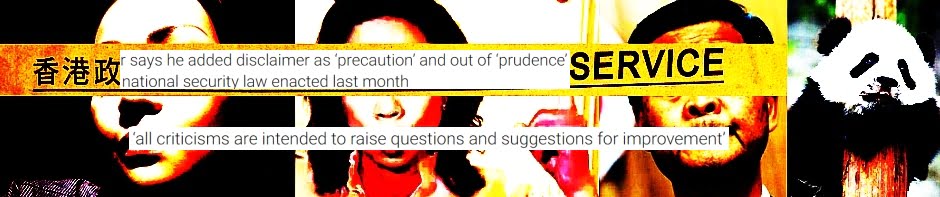
Thanks to divine intercession, perhaps, national security remains intact after a church in Tai Po goes ahead with a memorial service for the Wang Fuk Court victims…
[Mr E] added that he was particularly emotional watching the bishop give individual blessings to former Wang Fuk Court residents.
His wife, Mrs E, said she found it “strange” that police had approached the church.
“Why is our mourning any of their business?” she said in Cantonese. “Mourning those who passed away in a tragedy that happened so close to us, why do they have to be concerned about that?”
Another woman who attended the mass, who asked not to be identified, said she did not think police should have questioned the church.
“It’s not as if we are doing anything. We’re simply praying,” she said in Cantonese.
A Japan Times op-ed on the sentences meted out to Joshua Wong and Au Kam-sen…
The irony is that Chinese, Hong Kong and Macao government officials, politicians and businesspeople routinely meet with foreign diplomats and explain their own perspectives on China. Why, then, are pro-democracy activists and politicians accused of “collusion” for doing the same, while pro-Beijing figures face no such accusations? The arbitrary and vague definitions of national security offenses have effectively turned them into catchall charges for suppressing dissent.
…The proceedings in both Hong Kong and Macao raise fundamental questions about judicial independence, procedural fairness and the rule of law. Macao’s closed-door hearing is particularly troubling because it undermines the transparency required under international human rights standards. In Hong Kong, meanwhile, the court has failed to adequately demonstrate that the prosecution established its case beyond a reasonable doubt, as required by the city’s common law tradition.
What did Wong actually do? His activities included international advocacy and meetings with foreign politicians. Au gave interviews to foreign media. How can either activity reasonably be characterized as collusion or subversion? What exactly were they supposedly conspiring to do with foreign politicians and journalists?…
…The distinction appears to be that pro-government politicians can meet foreign officials and promote their views, while pro-democracy activists cannot criticize the authorities without risking imprisonment. In effect, people are permitted to say only favorable things about the government. Any criticism can be recast as “collusion with foreign forces.” That is not freedom of expression. It is the logic of authoritarian rule.
Philip Bowring has a new book out – The Invention of Asia. An extract in The Asian Review of Books (disregard rather glaring typo in the headline and url).
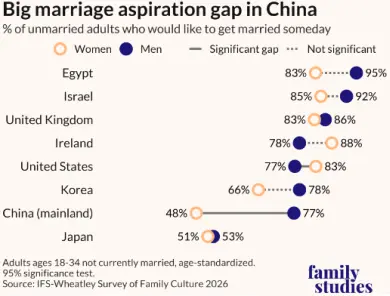
From this post, an Institute for Family Studies graphic showing the percentage of unmarried men and women who would like to tie the knot in eight countries. Most countries do not have a significant gap between the sexes (Japan has hardly any – though barely half of respondents actually want to marry). Then there’s China. Good luck on getting that birth rate up…
Not only can local pollies promote their views to overseas officials, but adherents of the Stalinist-leaning communist International from Australia or Britain can come here to dine and flirt with local “young elites” while promoting their views to each other. I have this on good authority.